History of Geometry

HISTORY OF GEOMETRY
Geometry is one of the earliest branches of Mathematics to be discussed. Its beginnings can be traced in ancient Egypt or early or before 1700 B.C. Due to necessity, every time the Nile River inundated and deposited fertile soil along the bank, the early Egyptian had to solve the problem of size and boundaries of land along the Nile River. Changes happened in the contour of the land had caused confusion among landowners. So a system of making boundaries, measuring lengths and areas had to be discovered. From this circumstance the name “Geometry” has evolved. The word “Geometry” originated from the word “Geo” means “earth” in Greek and “metros” means “to measure”.
In addition, the building of pyramids required special shapes of stones and precise measurements so that each block would fit exactly with the other. The Egyptian were mainly interested on the practical aspects of the subject. Hence, their knowledge was based on intuition, experiment and approximation.
The main record of ancient Egyptian Geometry has been the “Ahmes Papyrus” which was written by an Egyptian temple scribe around 1700 B.C. The “Ahmes Papyrus” is now kept in the British museum.
However, about one thousand years later, the ancient Greeks became interested in Geometry as a discipline that follows pattern and relationships based on logic. They systematized the study of the subject by a set of postulates. By using deductive reasoning, they were able to prove many theorems.
At around 600 B.C. Ionian Greeks who have traveled to Egypt, brought back to their land the first knowledge of Geometry. The most famous of these traveler was Thales, the first of the Seven Wise Men of Greece. He was the first to demonstrate the truth of geometric relationship by showing that it followed a logical and orderly fashion from a set of universally accepted statements called axiom and postulates. The deductive reasoning method has dominated all Geometry as well as all Mathematics to this day.
Thales most famous pupil was Pythagoras. He existed about 582 B.C. to 507 B.C. After traveling extensively, Pythagoras settled in Crotons, Italy where he established a society devoted to the study of Arithmetic, Music, Geometry and Astronomy. He and his colleagues proved many theorems about triangles and circles. The Pythagorean Theorem, which states the relationship between the legs and hypotenuse of a right triangle, was name after him. Although he died in exile he continued to influence Greek mathematician for many centuries. After his death, the critics of Elea in Italy, Athens in Green, and Alexandria in Egypt became the new homes of geometric advancement.
In Alexandria, about 300 B.C. Euclids, a mathematician of obscure origin, compiled into thirteen books most of the mathematical knowledge of his time. Seven of these books were devoted to Geometry. This great work was called “Elements”. The entire subject was thoroughly and systematically restated, the various statements and theorem were rearranged and numbered, and The Geometry of Solid bounded by flat surfaces was included.
The greatest mathematician of antiquity was the Greek Archimedes. He lived about 287-202 B.C. Extending Euclid’s treatment of solid bodies to include the sphere, cylinder and cone was among his contributions.
Other great Alexandrian Geometer includes Apollonius of Perga. He lived in about 261 B.C. to 190 B.C. He was the pupil of Archimedes. He produced an eight treaties on the conic section, which made him earn the titled, “The Great Geometer”. His writings and discoveries found application in the work of Kepler and Newton on planetary orbit.
In AD 641, the Arabs attacked Alexandria and destroyed the university and the library. After the fall of Alexandria, most of the work of Greek mathematicians were scattered or lost.
In Europe after the fall of the Roman Empire in the fifth century, a period of almost total ignorance of the sciences followed. During the twelfth and thirteenth centuries, Elements was translated from the Greek and Arabic into Latin and the modern European languages, and geometry was added to the curriculum of monastery school.
MODERN DEVELOPMENTS
Gerard Desargues who lived about 1593-1652 A.D. laid the groundwork for projective Geometry – Projective Geometry treats properties of figures, particularly those which remain unchanged under various projections. Modern Geometry is composed of projective Geometry, conic section and the modern geometry of the triangle and circle.
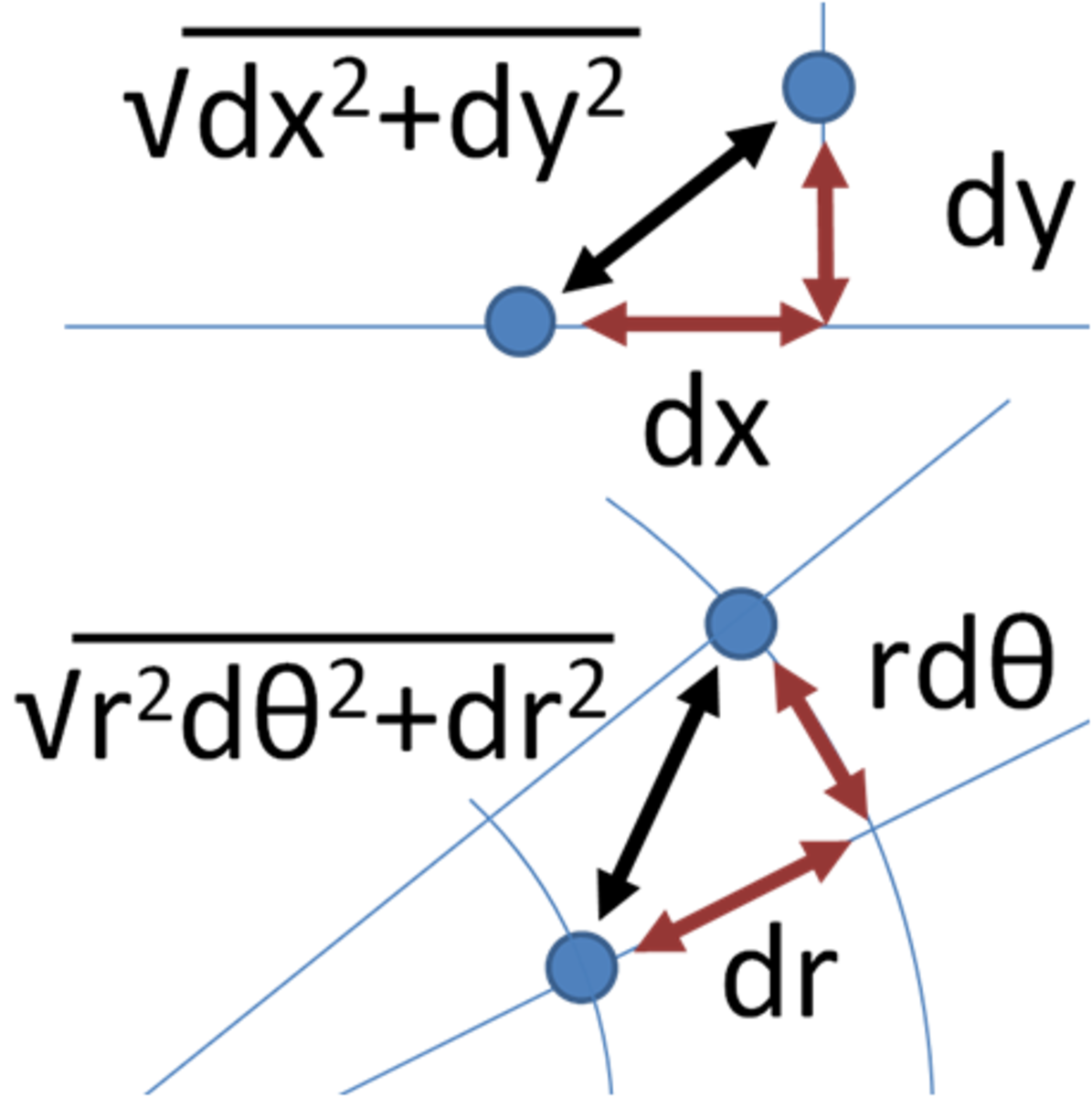
Gaspard Monge who lived about 1749-1818 A.D. introduced descriptive Geometry. Descriptive Geometry is concerned with representing geometric figures on planes and determining distances, angles, and lines of intersection by geometric means.
In 1637 A.D., Rene Descartes a French philosopher and Mathematician, published the first treaties on analytical Geometry. He applied Algebra’s methods to Geometry, showing that all kinds of Geometric problem could now be solved using a general approach.
Source: Geometry
by: Dr. Melecio C. Deauna